VENEZUELA: LET’S BE HONEST ABOUT WHAT THIS IS REALLY ABOUT
December 2025
Alright, time for a Venezuela reality check. Take a breath. Inhale. Exhale. Now ask yourself one simple question: do you truly believe this is about narco-trafficking? Seriously. That’s the story we’re being sold again, and if you’ve been paying attention to American foreign policy for longer than five minutes, you already know how this script works. Every time. It doesn’t matter whether it’s a donkey or an elephant in the Oval Office — when a president wants conflict, the media lines up behind it in the opening act. Name one time it didn’t happen. You can’t.
We saw it with Bill Clinton, with George H. W. Bush, with Barack Obama, with Hillary Clinton pushing Libya, and now we’re watching the same machine spin back up again around Venezuela. The headlines are already familiar: dictator, narco-state, terror ties, election theft, drugs flooding America. All the greatest hits. And yes, I’m not a fan of Nicolás Maduro or Chávez. But that’s not the point. The point is the narrative we’re being conditioned to accept without asking the most important question first: what’s really at stake here?
Let’s stop pretending. This isn’t about cocaine, fentanyl, terrorism, or saving democracy.
This is about oil. It always has been.
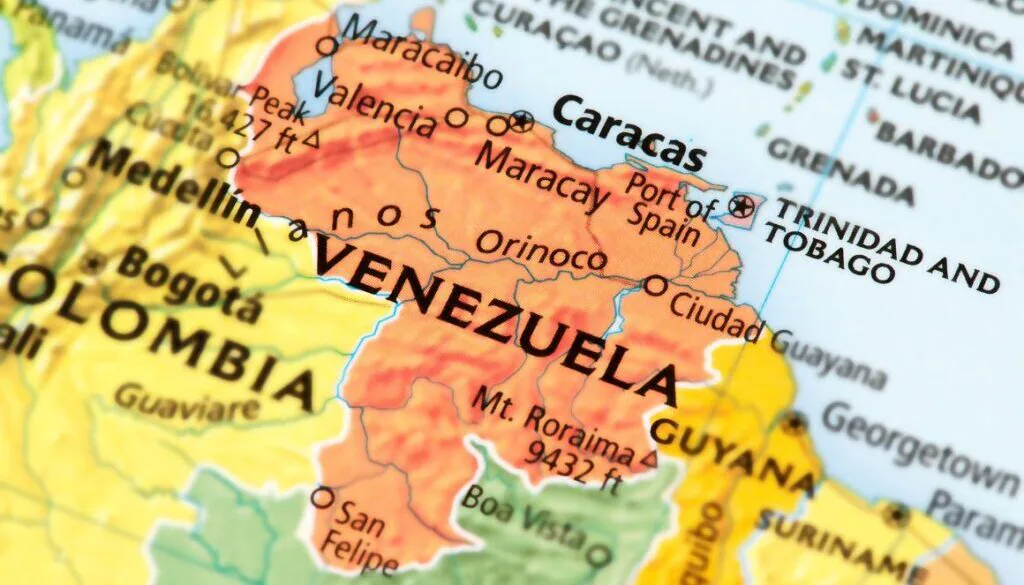
Venezuela sits on the largest proven oil reserves on the entire planet — roughly 304 billion barrels. Saudi Arabia isn’t even close at 267 billion. Iran holds 209 billion. Canada, 170 billion. Iraq, 145 billion. The United States? About 74 billion. Venezuela sits at the top of the list. And yes, their oil is heavy crude — thick, tar-like, difficult to refine — but we have the refineries that can handle it. We’ve had them for decades. So when you’re told this sudden urgency is about “narco-trafficking,” you should immediately be skeptical.
And listen to what they’re saying now. Senate Republicans, led by hard-line neocon voices like Tom Cotton, are pushing the idea that Maduro is personally responsible for drug deaths in America. That’s simply false. The fentanyl killing Americans is not coming from Venezuela. It’s coming primarily through Mexico, using Chinese precursors. Cocaine overdoses exist, but they are not driving the death count the way fentanyl is. This is narrative engineering, not reality.
Then you have Lindsey Graham — a man who has never met a war he doesn’t like — publicly calling for military force, dismissing diplomacy, and framing Venezuela as the next “inevitable” conflict. And for everyone telling me, “There won’t be boots on the ground,” let me translate that properly: that just means drones, missiles, blockades, cyberwar, sanctions, and civilian casualties from thousand-mile distance. Clean for us. Devastating for them.
We pretend these conflicts are surgical. They never are. Under Barack Obama, drone strikes exploded across Pakistan, Yemen, and Somalia. Estimates put civilian deaths in the thousands. Under Donald Trump, drone strikes didn’t stop — in many cases, they accelerated. So let’s drop the illusion that this would be some clean, targeted operation that magically avoids civilians. History says otherwise.
What we’re really watching right now is the same geopolitical playbook that led us into Iraq, Libya, Afghanistan, and countless proxy conflicts. First comes the demonization. Then comes the moral framing. Then comes the inevitability narrative. Then comes the “limited” military response that never stays limited. And by the time the public realizes what’s happening, we’re already committed.
John Quincy Adams warned us about this almost 200 years ago: America does not go abroad in search of monsters to destroy, because once she does, she ceases to be the ruler of her own spirit and becomes something else entirely. That warning is more relevant now than ever. We’ve become the global dictatorship of force — regime change by airstrike, diplomacy by sanction, “democracy” by drone.
Here’s the question that cuts through all of it: did you vote for Trump to keep us out of foreign wars, or didn’t you? Because that was a core promise. No endless wars. No new wars. No neocon nation-building. You don’t get to call Venezuela a “necessary conflict” now without admitting that the very thing voters wanted to escape is creeping back in through the side door — this time wrapped in oil economics and media fear-mongering.
This is exactly how it always starts. First the headlines. Then the moral outrage. Then the “credible threat” language. Then the normalization of escalation. And before anyone realizes what happened, we’re ten years in, trillions of dollars gone, thousands of lives lost, and the same people who sold the war are on television delivering post-mortems they’ll never take responsibility for.
You don’t need conspiracy theories to explain this. You only need history, incentives, and math. Oil is power. Oil is leverage. Oil is money. And money drives foreign policy far more reliably than morality ever has.
You don’t have to like Maduro. You don’t have to defend his failures. But you do have to recognize when the American war machine is warming up again — because it always sounds righteous right before it turns catastrophic.
And that’s the honest Venezuela reality check.