
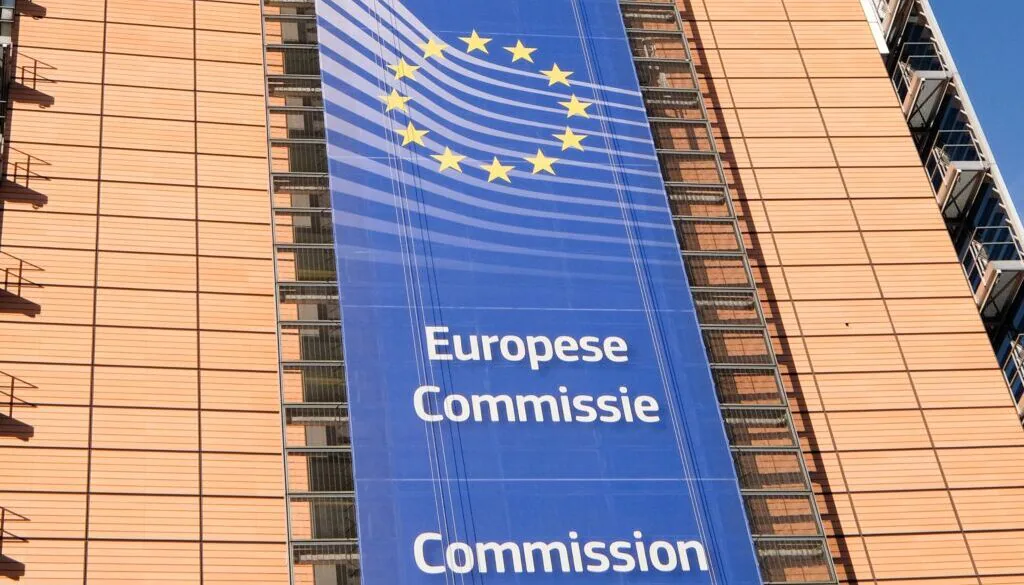
WHY THE EUROPEAN COMMISSION IS HURTING EUROPE, NOT HELPING IT
The European Commission just fined X roughly €120 million under the EU’s Digital Services Act, targeting Elon Musk personally in the process. On its face, this is being sold as a move to “modernize” Europe and protect democracy. In reality, it looks far more like self-preservation by an unelected bureaucracy that feels its influence slipping.
Here’s the part few people understand: the European Commission is not elected by the public. It operates out of Brussels with enormous power over nearly 450 million citizens, yet without direct voter accountability. That tension is now reaching a breaking point.
One of the Commission’s claims is that paid verification and blue check marks interfere with users’ ability to judge authenticity. I’d argue against the opposite—verification is one of the few tools that helps users assess credibility in a chaotic digital space. They also want access to X’s advertising data to combat “disinformation.” That may sound noble, but it also opens the door to broad political control over speech and platforms.
Here’s the bigger problem: Europe says it wants to compete in AI, tech, and innovation—then turns around and punishes the companies doing well. You don’t build competitive industries by regulating success into submission. You attract capital and talent by creating clear, stable, and fair rules, not by making examples out of high-profile firms.
At the same time, you’re seeing political pushbacks across Europe. Leaders like Viktor Orbán in Hungary and governments in Poland, Italy, and Greece have started asserting more national control—especially over immigration, energy, and economic policy. Coincidentally, some of those markets have vastly outperformed broader EU benchmarks over the past year.
We already saw what happens when frustration boils over: Brexit. And it won’t be the last fracture if Brussels continues expanding its power without restraint.
This doesn’t mean the European Union was a bad idea. Early cooperation on trade, borders, and movement of goods made sense. But like all bureaucracies, it expanded—slowly at first, then aggressively—until it became detached from the people it governs.
Europe doesn’t need more centralized regulation. It needs:
-
- Real accountability
- Competitive tax and business policy
- Innovation without punishment
- National flexibility instead of top-down mandates
And beyond the EU itself, this matters for America too—especially as we reassess relationships tied to defense, trade, and alliances like NATO.
The bottom line: You don’t regulate your way into innovation. You innovate your way into leadership.
If Brussels doesn’t understand that soon, the pushback won’t slow down—and the European project itself may not survive in its current form